with Mati Boulakia-Bortnick
Sunday, October 11, 2026
at 3 PM Eastern Daylight Time (EDT)
Register to receive a Zoom link to join us online. Barring technical issues, this program will be added to our Recording Archive.
Mordecai M. Kaplan built the architecture of American Jewish life and remained, by his own account, profoundly alone inside it. His diaries describe masking before the word existed, meltdowns he had no language for, and a hyperfocus that could fix on one mispronounced vowel for a week. It isn’t incidental or interesting colour to his life story, but a mind working the way many autistic minds work: systemic, uncompromising, and unwilling to perform to others arbitrary standards. Popular writing on Kaplan has for decades used words like “paradox” and “enigma” to explain what a disability lens would simply call autistic. I don’t seek to diagnose Kaplan – it’s about reading him the way queer historians have long read Whitman – and I argue he wasn’t monumental despite the traits that isolated him. He was monumental because of them.
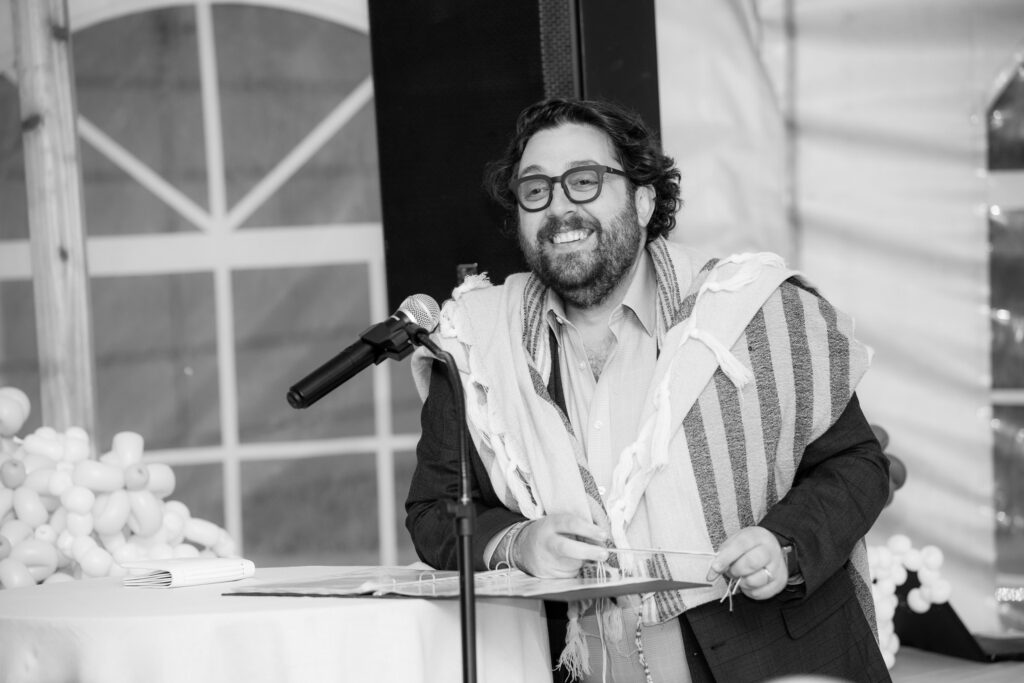
Mati Boulakia-Bortnick is a student rabbi at the École Rabbinique de Paris and the Educational Director of the Jewish Autism Network. He is an autistic and multi-disabled activist, and he works as an autism and disability educator in the Jewish community, as well as in the private and public sectors. Through his consulting and peer-support coaching work, Mati provides support to individuals and organisations in creating inclusive spaces and developing practical tools to empower disabled communities and community members. He is an alumnus of Indiana University, the Hebrew University of Jerusalem, and Sciences Po Paris. Mati is currently pursuing his doctorate, researching the topic of neurodivergence and madness in rabbinic literature. He is also currently completing his MTh in Disability Theology at the University of Aberdeen. As well as his rabbinic and academic work, Mati serves on the Board of Directors of SVARA and is the co-editor of the forthcoming Neurodivergent Torah (Ben Yehuda Press, 2027).
Many thanks to David Joyner and Judith Kinman for sponsoring this webinar!
Sponsor this webinar and receive acknowledgement on our website and permanent webinar recording or remain anonymous if you prefer. We appreciate your generosity to help continue our educational programming! As always, your donation is tax-deductible.